Puck on Ice · SimulatorInertia on Low-Friction Ice
A puck sliding on ice with a logarithmic friction slider spanning three decades (μk = 0.0001 to 0.1): from idealized frictionless through real hockey-puck-on-ice to rough/worn ice, watch inertia in action.
Published: May 25, 2026 · Updated: June 5, 2026
Objective
Verify Newton's First Law: an object in motion remains in motion at constant velocity unless acted on by a net force. The friction slider is logarithmic, spanning μk = 0.0001 (essentially frictionless) to μk = 0.1 (rough/worn ice). At low μk the puck slides at near-constant speed for the full 30 s time cap; as μk approaches 0.1 the puck decelerates according to a = μk · g and stops at distance d = v₀² / (2 · μk · g). The simulation assumes a flat horizontal surface, point-mass puck, and no air resistance.
Setup
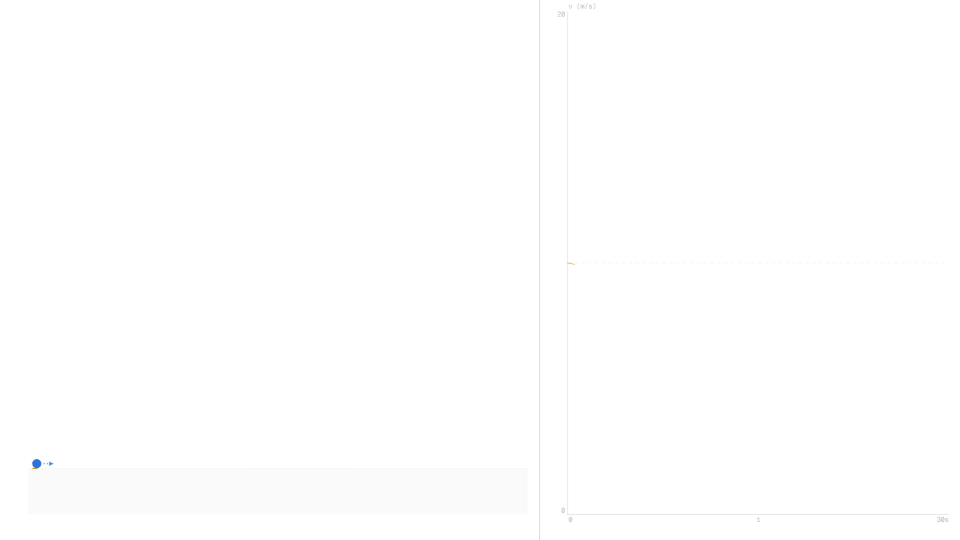
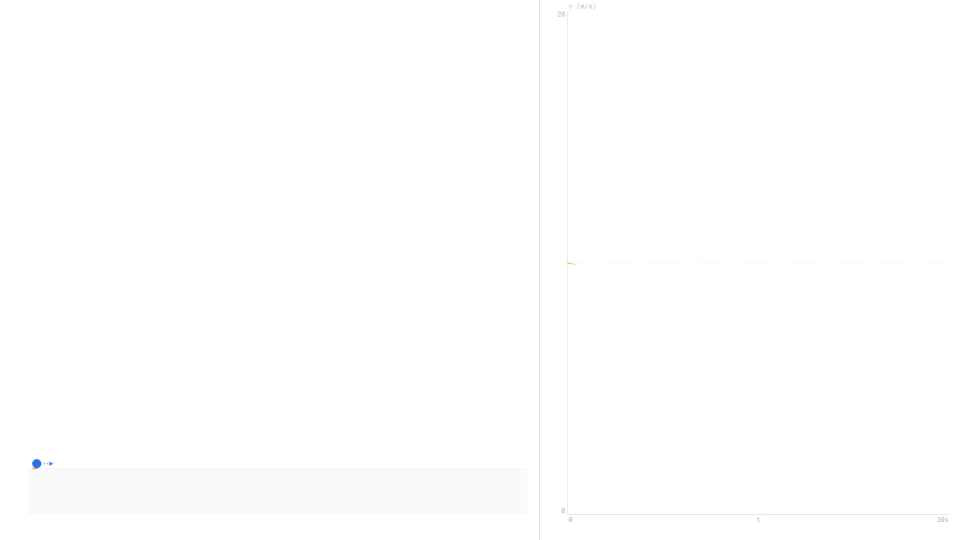
- Slide Friction (μk) to its minimum (0.0001, idealized frictionless) and set Initial Speed to 10 m/s. Press Start; observe the puck sliding at essentially constant speed across the full canvas.
- Note the Speed readout: it should remain at 10.00 m/s for the entire 30 s run. The simulation stops at the time cap because friction is too small to halt the puck within 30 seconds.
- Press Reset. Set μk to 0.01 (slider default, typical hockey puck on ice) and Initial Speed to 10 m/s. Press Start. The puck decelerates visibly; in 30 s the Distance readout reaches about 256 m and the Speed readout falls to roughly 7 m/s without the puck stopping.
- Press Reset. Set μk to 0.1 (slider maximum, rough or worn ice) and Initial Speed to 10 m/s. Press Start. The puck halts after about 10 seconds at a Distance of approximately 51 m.
- Compare the Distance and Speed readouts at the end of each run for the three friction values (0.0001, 0.01, 0.1); record them in a notebook between runs to see how three orders of magnitude of friction map onto observable behavior (Reset clears the on-screen history).
Analytical Prediction
With μk = 0.1 (slider maximum), v₀ = 10 m/s, and g = 9.81 m/s², the deceleration and stopping distance are:
The puck stops after traveling approximately 51.0 m, which the Distance readout should display at halt (about 10.2 s after launch). With μk = 0.01 (slider default, real ice) the deceleration is 0.0981 m/s²: the puck would need 510 m to stop, well beyond the 30 s time cap, so the Distance readout instead reaches about 256 m when the cap fires and the Speed readout shows about 7 m/s. With μk = 0.0001 (slider minimum) the deceleration is 0.000981 m/s² (essentially zero) and the Speed readout holds at 10.00 m/s for the full 30 s.
Results Analysis
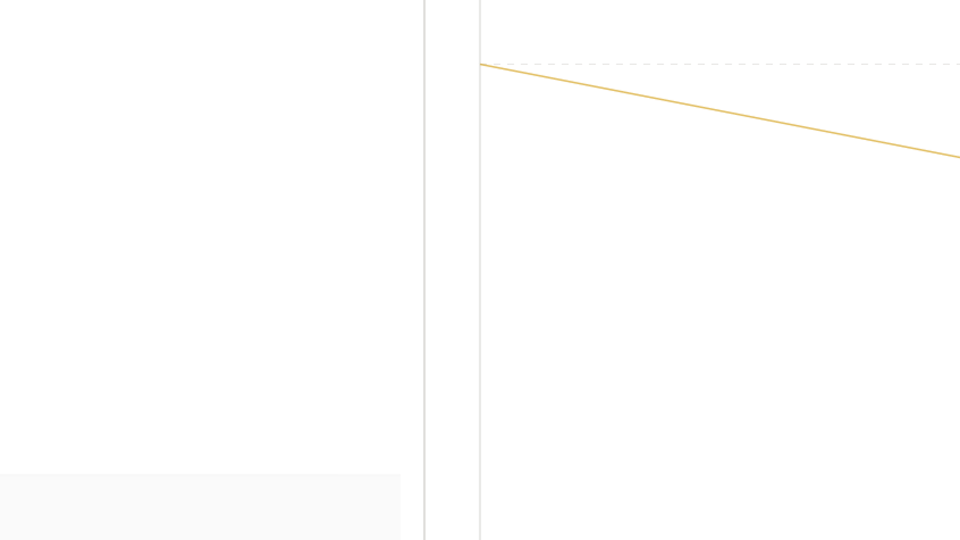
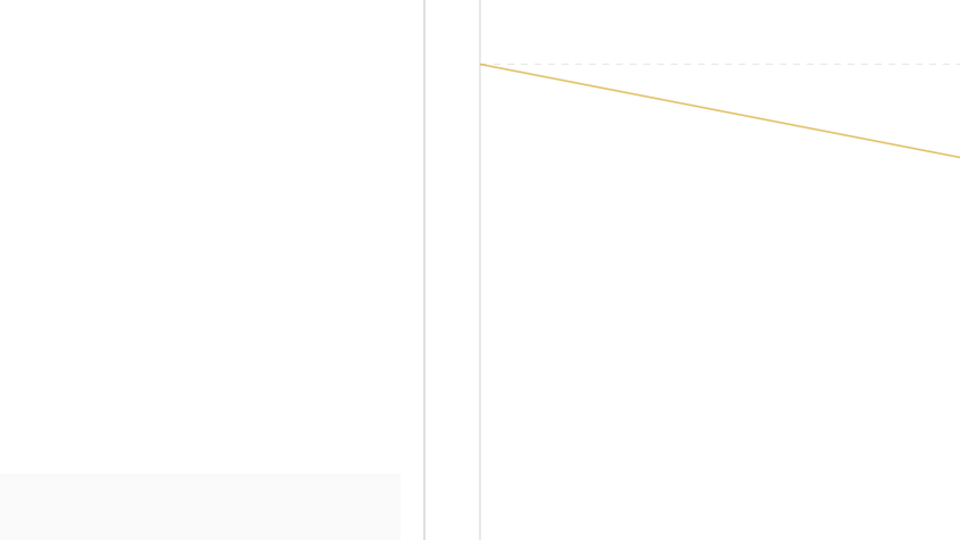
After each run, compare the readouts to the analytical prediction. At μk = 0.1 the puck halts within 30 s and the Distance readout should read approximately 51.0 m (±0.5 m). At μk = 0.01 the puck does not halt within the time cap; the Distance readout at t = 30 s should read approximately 256 m and the Speed readout about 7 m/s: friction is removing energy but the run ends before zero velocity. At μk = 0.0001 the Speed readout stays essentially at 10.00 m/s for the full 30 s, confirming Newton's First Law directly: the net force is negligible, so velocity barely changes. The Kin. Energy readout mirrors the square of the speed in each case.
Source of Error
The model treats the puck as a point mass on a perfectly flat, rigid surface with no air resistance, no rolling resistance, and no rotational inertia. Real ice pucks experience a small viscous drag component and pressure-melting lubrication that reduces μk below the value for dry surfaces; this sim uses a single μk value as a tuneable parameter. The analytical prediction assumes the same point-mass, constant-μk model, so the two share identical idealizations and any residual gap is purely numerical.
Further Exploration
- Set μk to its slider minimum (0.0001) and vary the Initial Speed from 1 to 20 m/s. Does the Speed readout change during the run? Why does Newton's First Law predict it should not, regardless of initial value?
- Sweep μk across three decades from 0.0001 to 0.1 with Initial Speed fixed at 10 m/s. Note the Distance readout at t = 30 s (or at halt, whichever comes first). At what μk does the puck just barely stop within the time cap?
- Set μk to 0.1 (slider max) and compare the Distance readout for v₀ = 5 m/s versus v₀ = 10 m/s. The formula d = v₀² / (2 · μk · g) predicts the ratio should be 1:4. Does the simulation agree?
- At μk = 0.01, the puck travels about 256 m in 30 s but doesn't stop. Use the kinematic equation d = v₀·t − ½·a·t² with a = μk·g to predict the distance, then verify with the Distance readout. Why does this regime (long time cap, finite friction) demonstrate inertia more vividly than the high-friction halt?